
With tech titans like Jack Dorsey, Elon Musk, and Richard Branson using pivotal moments to spark conversations about new inventions, Deepinder Goyal’s recent appearance on a popular podcast, where he was seen wearing a peculiar gadget on his temple, has emerged as a fascinating case study. What could have otherwise been a routine discussion has escalated into a full-blown phenomenon, not based on what was said but based on what was worn: a fancy gadget made of metal, which has since gone public with a name, Temple, launched by Deepinder Goyal himself. Its impact was immediate. Viral memes, widespread discussions, skepticism among medical professionals, and growing curiosity across the global community created an organic wave of attention that no traditional marketing campaign could have achieved.
However, beneath all the social commotion, one question arises: Can such viral occurrences serve as an effective platform for marketing innovative designs offered by AI technology, even those still at the experimental level? This blog will unpack the ways through which viral marketing can be an influential platform for influencing the discussion surrounding AI-enhanced technology.
Everyone Had the Same Question: How Temple Took Over the Internet
During an episode of a podcast hosted by Raj Shamani, Zomato CEO Deepinder Goyal was noticed not for making a corporate announcement, but for an unusual device clipped to the back of his ear. The audience automatically began to focus on it as the video began to roll.
Social media was flooded with guesses:
- Was it a next-generation health sensor?
- A neural interface?
- A miniaturized medical device?
With the curiosity building, the media has helped shed light on the confusion: “The device, called Temple, is an experimental wearable that tracks changes in blood flow to the brain in real time. This data correlates to the health and function of the brain and the effects of aging.”
This piques curiosity because the wearable that tracks health indicators is already among the leading technologies in the personal technology front, but brain-related wearables have not seen significant advancements.
It is this organic act of discovery, before a formal product launch, launch event, or advertising campaign, that exemplifies what marketers refer to as “earned media,” that is, publicity that is created, rather than purchased, through consumer-generated buzz.
Temple: Hype or Innovation? A Closer Look at the Device
Before we can fully grasp the implications of this in terms of marketing, there is a need to highlight what Temple is in a very brief manner:
- It’s a wearables experiment designed for the continuous measurement of blood flow to the brain, a function found in very few wearables currently on the market.
- Goyal’s work revolves around the technology that is substantiated through the “Gravity Ageing Hypothesis,” which suggests that the force of gravity could have an impact on the circulation of blood in the body, ultimately contributing to the
- The initial response has been skeptical by some doctors, being termed unproven scientifically, and with calls not to get too carried away, while an ex-AIIMS doctor has termed it as having no scientific standing.
Worth noting is the fact that Temple is not yet a commercial product. In fact, Temple is still in the testing phase. However, it managed to draw the attention of the world prior to the official marketing and release.
This one-of-a-kind circumstance, in which a prototype takes center stage, proves to be both an opportunity and a challenge for AI developers.
Why Going Viral Works So Well for Tech Brands
1. They Turn Curiosity into Awareness
A defining trait of the viral moment is how it converts unintended details into headlines.
Goyal didn’t appear on the podcast to hawk Temple. He didn’t declare a launch date. And the device on his wrist wasn’t the topic at hand, but that didn’t stop anyone from noticing it. The result? Conversation across social media, blogs, forums, and news outlets-all free of paid advertising.
Conventional marketing would spend thousands on:
- TV spots
- Advertisements on the internet
- PR campaigns
- Influencer tie-ins
Yet Temple managed to pull off organic reach simply by being on someone’s head during a video that went viral. Viral attention is essentially user-generated marketing run on curiosity.
This is a clever tactic because people are fundamentally curious about what they don’t know, particularly when the things they don’t know revolve around technology and the human body.
2. They Encourage Community Involvement and Discussion
Viral moments spark discussion, both positive and negative. “The Temple tool had exactly that kind of effect,” Ray Kelly, the NYPD’s police commissioner, explained: “It helped
- It was described as “fascinating” and “wild” by tech cognoscenti and startup entrepreneurs, which can only be described as laudatory talk that further adds to its innovative quality in the device.
- But there was a valid concern raised by medical professionals about a lack of proof and scientific validation.
This two-sided conversation keeps the topic in the news longer than a formal ad campaign would. Both critics and supporters of the topic are participating in the long-tail conversations.
3. They Position Leaders as Forward-Thinkers
By donning Temple, Goyal made, or made himself to appear, as:
- A visionary with experience in innovative wearable technology projects
- A leader who is not afraid to speak out about radical thoughts
- The founder is willing to be open about his own use of the experimental technology
“Being tied to the story of AI is an amazing branding experience, especially if you are involved in AI innovation. Your personal brand gets linked to the story of the innovation that is AI.”
This stylistic choice has a connection with tech giants who display their technological prowess at conferences by showing how they use gadgets in their personal lives, but in this situation, a wearable experience had a similar impact without purpose, ironically making it rather interesting.
What Temple Teaches Us About AI Marketing
Therefore, what kind of lessons can AI innovators draw from this viral moment? Here are the actionable marketing pointers:
1. Let Authentic Context Drive Exposure
Visibility at Temple was part of a natural event rather than a planned advertisement. Being genuine is more effective than a staged demo. Viewers tend to believe naturally occurring content more readily than advertisements. This is simply because it is less planned.
How to Put This into Practice:
- It is good to encourage thought leaders in your company to use your technology in public situations.
- Share authentic, unscripted stories because they have more impact than a commercial.
- “Create stories out of user stories instead of specs.”
Authenticity breeds shareable moments.
2. Engage in a Conversation Even When it is Critical
Not all attention is necessarily good attention. In fact, the Temple device was greeted with scepticism by doctors and vigorous debate over its validity.
However, the negative or critical reporting is also a conversation, and conversation drives attention.
How to Put This into Practice:
- Ready your brand to respond to critics in a respectful manner
- As a response to skepticism, it should be seen as an avenue to clarify and educate.
- Use debates to create thought leadership content or Q&A articles
Criticism is not a setback. When handled openly, it builds credibility.
3. Blending Storytelling with Technology
The tale of Temple is more than a gadget because the story revolves around a theory, curiosity, and a vision for human health. The tale added meaning to the technology.
How to Put This into Practice:
- To make your innovation more meaningful and memorable, frame it in the context of an interesting story that includes the problem, vision, and
- Don’t use technical talk in a vacuum. Connect the tech to a human experience.
- Use storytelling to convert features to impact.
It’s the Stories That Make Technology Memorable.
4. Create Buzz Across Multiple Channels
The Temple viral video was shared across:
- Podcasts
- Social Media Reactions
- Social
- Tech news and blog sites
- Meme subculture and conversation speak
Each of the channels added to it their own element. Also importantly, a viral event is not spread through an advertising campaign but is itself shared through multiple channels.
How to Put This into Practice
- Your tech should be represented in public forums, talk show programs, forums, and communities.
- User-generated content related to your innovation should be encouraged.
- Monitor organic mentions and engage if necessary.
Different channels will give you an even bigger audience.
Possible Risks and Ethical Concerns
Viral marketing, although highly effective, also has its dangers:
1. When Hype Outruns Evidence
There have even been questions raised over Temple’s scientific basis, with medical professionals advising people not to regard it as proven technology.
It is important for firms in AI and health technology to avoid making promises about their products. Viral media attention without any tangible results can lead to negative effects in the future.
What Works Best: The best balance to strike: Curiosity must be tempered by caveats.
2. Misinterpretation by the Public
Memes and jokes are entertaining, but they may misrepresent the true intention of the technology. This is crucial in ensuring the right perception of the technology among the general public.
What Works Best: Take advantage of “viral” events to communicate and educate, not just entertain.
3. Privacy and Ethics in AI Wearables
Brands have the responsibility of being open regarding privacy and the use of health-related data when they market their offerings involving AI and wearable technology.
What Works Best: Keep commitments to uphold privacy at the forefront and make them readily understandable, especially during times of heightened public interest.
What This Means for the Future of AI
What the Temple phenomenon underlines is that viral moments will lift AI innovations into mainstream discussion, even if the complete product is still an idea. It contravenes traditional marketing wisdom and opens up organic doors to brand shaping.
The lesson for AI innovators is a simple one:
Visibility doesn’t require perfection; it requires presence.
By being part of the conversation, even incidentally, your technology can reach further than it can through contrived marketing.
Conclusion
Though Deepinder Goyal’s Temple gadget might still be in its experimental stages, with its scientific claims open to interpretation, its journey into the limelight proves an important fact: curiosity-driven humans remain the best marketing tools.
Whether it’s a revolutionary AI algorithm, a wearable tech product, or a health tech device, never forget the power of actual moments, and moments that intrigue, surprise, and propel conversations can mean more than advertising budgets totaling billions of dollars.
In the social media era and the hyper-connected audience, the most successful campaigns begin with a question, and not a pitch.
The world is moving toward voice-first experiences faster than we ever imagined. Whether it’s those smart assistants we talk to every morning, the automated customer support we rely on, or the AI-powered stories we enjoy on YouTube, the demand for AI voice generator technology that sounds real, emotional, and human-like has exploded.
The global AI voice generator market is growing much faster than anyone expected. It was worth approximately USD 2.9 billion in 2024, and experts predict it may reach nearly USD 10.8 billion by 2034, with a projected annual growth rate of 14.2%. When a technology grows this quickly in just a few years, it’s clear that it’s reshaping industries everywhere.
The reality is, if you look around your daily life, you’ll notice the shift too. I recently spoke to a creator who joked that she no longer records her own narrations because her AI voice generator does it better, faster, and even in multiple accents. That’s the kind of personal impact people are experiencing today.
Behind this huge change is a powerful idea called advanced AI voice generator platform development, a technology that is reshaping how we create content, communicate with others, and connect emotionally through voice.
What Is Advanced AI Voice Generator Platform Development?
Advanced AI voice generator platform development focuses on building intelligent tools that turn written text into natural, human-like speech. These platforms can clone real voices, change someone’s voice in real time, and even add emotions, tones, and accents, all powered by AI. They bring together technologies like neural text-to-speech, AI voice cloning, voice changers, and speech-to-speech systems to create clear, expressive audio that sounds genuinely human.
To explain simply, advanced AI voice generator platform development makes it easy for anyone to create high-quality voice content without a studio or professional equipment. Whether you’re a business owner, content creator, teacher, gamer, or part of a customer support team, these tools help you generate clear, natural, human-like audio in just a few seconds.
Moreover, you can build your own cloned voice, create realistic AI narrators, offer multilingual support, or generate voiceovers instantly. Modern solutions such as AI voice creators, free AI voice generators, AI voice changers, and AI voice text-to-speech tools are all part of this fast-growing ecosystem, making professional-grade audio simple, affordable, and accessible for everyone.
You may also want to know the Best Shopify AI Website Builder
Why is AI voice generator technology important?
If you look around, you’ll probably notice how AI voices are everywhere, in YouTube videos, Instagram reels, ads, podcasts, training modules, and even customer support systems. This rise isn’t just a trend. It’s a clear sign of how AI voice generator tools are transforming the way we create and consume content.
Nowadays, in businesses, we can see many teams creating ads, explainer videos, and training material in hours instead of weeks. With AI voice generators, they don’t worry about schedules or expensive voice-over fees. A single script can be transformed into multiple languages, keeping the same warm, consistent brand voice. Some companies even build a custom AI voice clone that becomes the official “brand narrator.”
Even creators are embracing AI voice generators, as they have changed their daily workflow completely. They can produce dozens of videos without ever recording a single line. Some use their own AI-cloned voice, while others play with accents, emotions, or character voices to make stories more fun. Free AI voice generators and AI voice changers help them experiment without spending anything.
Core Features of a Modern AI Voice Generator Platform
Let users turn text into natural, human-like speech and clone voices easily. With tools like AI voice changers and AI voice text-to-speech, creators and businesses can quickly produce high-quality audio content. Here are the following key features of the AI voice changer:
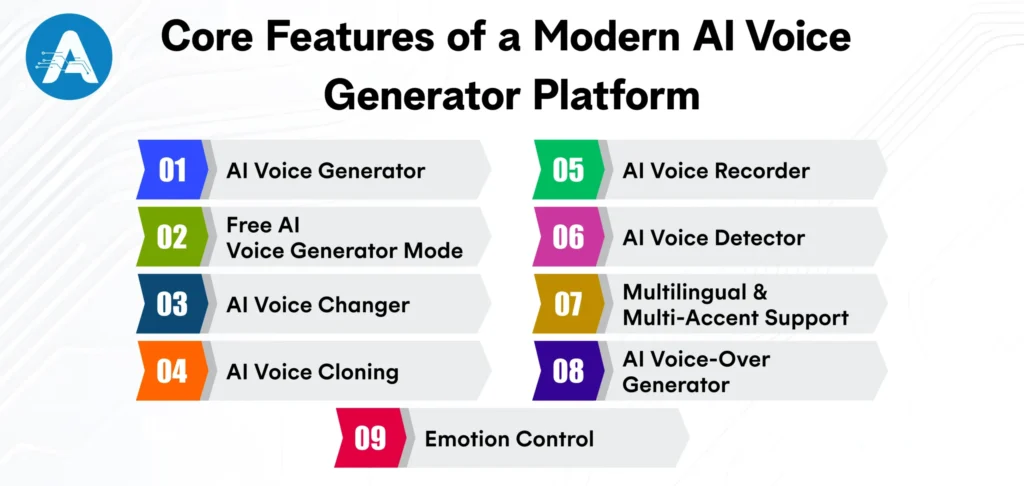
- AI Voice Generator- Converts any text into lifelike, expressive speech that feels natural and human.
- Free AI Voice Generator Mode- Beginners and creators can experiment with AI voices at no cost.
- AI Voice Changer- Instantly modify voice pitch, tone, age, gender, or accent for flexibility.
- AI Voice Cloning- Generate a digital version of any voice using just a few seconds of audio.
- AI Voice Recorder-Record, edit, and polish audio directly within the platform.
- AI Voice Detector- Quickly verify if a voice is real or AI-generated for responsible use.
- Multilingual & Multi-Accent Support- Create authentic voices in 30–120 languages and accents.
- AI Voice-Over Generator – Perfect for creators, educators, marketers, and e-commerce projects.
- Emotion Control- Add emotions like happy, sad, calm, dramatic, storytelling, or professional tones.
- API Integration- Seamlessly integrate AI voice features into apps, websites, or games.
Step-by-Step Approach to Build an AI Voice Generator Platform
Building a modern AI voice generator platform happens in a series of clear steps, starting from planning and design all the way to deployment. Here’s a simple, step-by-step breakdown of the entire process.
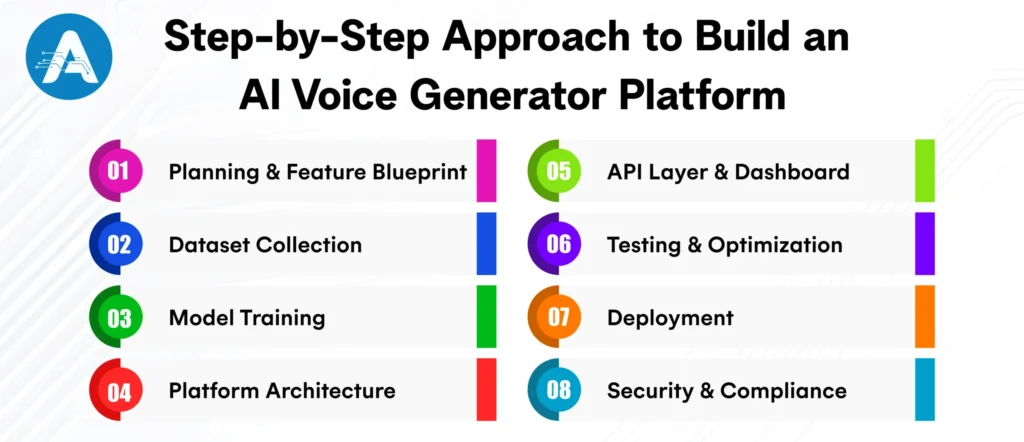
Step 1: Planning & Feature Blueprint
Before development starts, it’s important to clearly outline the platform’s goals:
- Understand the needs of your users and the problems you want to solve.
- Identify the industries you want to target, such as e-learning, marketing, gaming, or healthcare.
- Plan the voice library, including different genders, accents, and emotional tones.
- Decide on multilingual support for a global audience.
- Choose a pricing model, whether freemium, credit-based, or API subscription.
Step 2: Dataset Collection
Collecting high-quality voice data is essential for creating realistic and natural-sounding AI voices:
- Gather 5,000+ hours of diverse speech recordings
- Include multiple genders and age groups to cover a wide range of voices
- Incorporate varied accents and languages for global reach
- Use emotion-rich recordings to make AI voice text-to-speech sound expressive and human-like
Step 3: Model Training
This is the most resource-intensive stage of building an AI voice generator.
- Train models for text-to-speech, AI voice cloning, and AI voice changers using advanced neural networks.
- Leverage GPUs and cloud infrastructure to speed up training and handle large datasets efficiently.
- Fine-tune the models to ensure natural emotion, accurate tone, and proper accent for realistic, human-like voices.
Step 4: Platform Architecture
A strong and well-planned architecture is key to a smooth and reliable AI voice generator platform:
- The backend is developed using Python or Node.js, using frameworks like TensorFlow or PyTorch for AI processing.
- The frontend is built with React or Next.js to deliver a smooth and responsive user experience.
- Databases such as MongoDB or PostgreSQL are used to efficiently store and manage large volumes of voice data.
Step 5: API Layer & Dashboard
Provide easy access to users:
- A web interface allows content creators to generate and manage AI voices easily.
- A mobile app provides on-the-go access for creating voice content anytime, anywhere.
- REST APIs enable seamless integration of AI voice features into other apps and platforms.
Step 6: Testing & Optimisation
Ensure high-quality output:
- Check for accuracy and correct pronunciation in generated voices.
- Measure latency to ensure real-time speech generation works smoothly.
- Ensure emotional consistency so voices sound natural and expressive.
- Monitor for voice drift or any unnatural variations over time.
- Confirm multilingual consistency across different languages and accents.
Step 7: Deployment
Deploy the platform with scalable infrastructure:
- Use Docker to package the platform efficiently.
- Deploy with Kubernetes for scalable and reliable operations.
- Utilise GPU cloud services to handle heavy AI processing.
- Set up CI/CD pipelines for continuous updates and improvements.
Step 8: Security & Compliance
Protect users and maintain ethical use:
- Apply voice watermarking to protect generated content.
- Incorporate AI voice detection tools to prevent misuse.
- Verify user consent before using AI voice cloning or generating voices.
You may also want to know Create an Artificial Intelligence Startup
What Technologies Power AI Voice Generators?
To build an advanced AI voice generator, it’s important to understand the technologies behind it. Modern platforms combine several key components to produce natural, human-like speech and support features like AI voice cloning, AI voice text-to-speech, andAI voice changers.
- Deep Learning Models: Most modern AI voice generators use models like Tacotron 2, FastSpeech 2, VITS, diffusion-based engines, and transformer architectures. These models help produce expressive, lifelike speech that feels natural to listeners.
- Voice Cloning Algorithms: Using speaker encoders and autoencoders, these platforms can accurately replicate voices, capturing tone, emotion, style, and pronunciation patterns. This is the core technology behind AI voice cloning for personal or brand-specific voices.
- Natural Language Processing (NLP): NLP ensures the speech sounds context-aware by handling pauses, emphasis, sentence emotion, and punctuation. This makes AI voice text-to-speech sound human and engaging.
- Speech Enhancement & Audio Processing: To deliver high-quality audio, platforms apply background noise removal, pitch correction, loudness normalisation, and studio-quality rendering. These features ensure professional-ready output from AI voice generators.
- Cloud & GPU Infrastructure: Training and running these models require powerful computing resources. Most platforms use AWS, Google Cloud, Azure, or NVIDIA DGX machines. This infrastructure enables real-time processing, handles large datasets, and supports advanced voice features efficiently.
How do AI voice generators help businesses grow?
Modern AI voice generators are transforming the way businesses create audio content, helping save time, cut costs, and maintain high quality. Here’s how they make an impact:
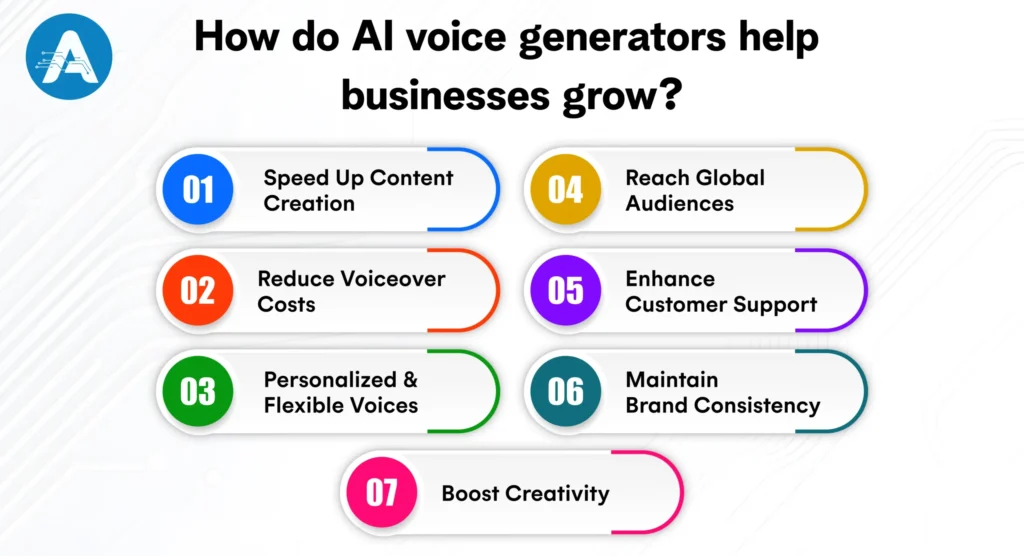
- Speed Up Content Creation- E-learning platforms use AI voice generators to narrate lessons in multiple languages within minutes, reaching students worldwide faster.
- Reduce Voiceover Costs- Brands can leverage AI voice cloning instead of hiring voice actors for every ad or video, saving money while maintaining professional audio quality.
- Personalised and Flexible Voices- With AI voice changers, businesses can adjust tone, pitch, or style. Game developers, for instance, create unique character voices without recording each line manually.
- Reach Global Audiences- AI voice text-to-speech enables companies to generate audio in multiple languages and accents, ideal for e-commerce product descriptions and international campaigns.
- Enhance Customer Support- AI-powered voice bots provide 24/7 assistance in natural, human-like voices, improving user experience and reducing support costs.
- Maintain Brand Consistency- Using AI voice cloning, businesses can keep a consistent voice across ads, videos, and tutorials, making their brand instantly recognisable.
- Boost Creativity- Media and entertainment creators use AI voice generators for podcasts, dubbing, and storytelling, allowing them to experiment and innovate quickly.
Apart from the numerous benefits of AI voice generators, there are some challenges that businesses and creators may face while using these platforms. Let’s take a closer look at the common challenges of AI voice generator platforms and explore practical solutions using keywords like AI voice cloning AI voice text-to-speech, and AI voice detectors.
Common Problems and Solutions for AI Voice Generator Platforms
Robotic or Unnatural Voices
Challenge: AI voice text-to-speech may sound mechanical at times.
Solution: Apply diffusion models and prosody adjustments for natural, human-like speech.
Misuse of AI Voices
Challenge: AI voice cloningcould be used unethically.
Solution: Use AI voice detectors and watermarking to prevent unauthorised use.
High Computing Costs
Challenge: Training AI voice models consumes significant GPU resources.
Solution: Optimise models and use compression techniques to lower costs.
Accent and Pronunciation Issues
Challenge: AI voices may mispronounce words or struggle with regional accents.
Solution: Develop language-specific models for accurate pronunciation and natural-sounding voices.
Scaling for Multiple Projects
Challenge: Managing high-volume audio production can be challenging.
Solution: Utilise cloud infrastructure and API integration to scale AI voice generator platforms efficiently.
How are AI voice generator platforms used in real life?
Businesses and creators rely on AI voice generators for e-learning, marketing, customer support, gaming, healthcare, and dubbing. Tools like AI voice cloning, AI voice changers, and AI voice text-to-speech help produce natural, human-like audio quickly, supporting multiple languages and diverse applications.
AI application developers are now integrating these advanced voice technologies into custom solutions, enabling brands and platforms to deliver more personalised and immersive audio experiences.
- E-Learning: Educators and course creators use AI voice generators to narrate lessons in multiple languages, making learning engaging and accessible worldwide.
- Digital Marketing: Companies create consistent voiceovers for ads, promotional videos, and social media content using AI voice cloning.
- Customer Support: AI voice bots handle calls and queries around the clock, providing natural, human-like responses that enhance customer satisfaction.
- Gaming & Entertainment: Game developers and animators generate character voices instantly, bringing stories to life with AI voice changers.
- Healthcare: AI voice assistants support patient communication by sending reminders, guiding users, and assisting healthcare professionals.
- Film & Dubbing: Studios streamline dubbing with AI voice generators, producing multi-voice content faster and more efficiently.
How will AI voice generator technology shape the future?
The future of AI voice generator development promises exciting improvements. We can expect innovations like zero-latency real-time speech generation, fully emotion-driven AI voice generators, and multimodal audio combined with lifelike video avatars. Advanced platforms will allow the creation of hyper-personalised “digital twin” voices, enabling individuals and brands to have their own unique voice identity.
Furthermore, AI-powered podcast engines that require little to no human input will further simplify content production, making audio creation faster, easier, and more scalable. As these technologies evolve, an AI development company will play a pivotal role in driving this transformation, leveraging AI voice cloning, AI voice changers, and advanced text-to-speech tools to revolutionise digital marketing, e-learning, entertainment, customer support, and personal communication.
The possibilities for creating engaging, human-like, and personalised voice experiences are virtually limitless, opening new avenues for innovation across industries.
Wrapping Up
Advanced AI voice generator platforms are rapidly becoming a cornerstone of modern content creation, marketing, automation, and digital communication. Leveraging AI voice generators, AI voice creators, AI voice cloning, and AI voice text-to-speech tools allows businesses and creators to produce professional, human-like audio faster and at scale, giving them a clear competitive edge.
For anyone planning to build an AI voice generator platform, the timing couldn’t be better. With features like real-time speech generation, emotion-driven voices, and multilingual capabilities, this industry is poised for massive growth over the next decade, offering endless opportunities for innovation and impact.
Furthermore, AI application development services are now enabling companies to turn these advanced voice technologies into powerful, user-friendly products tailored to specific industry needs. By integrating custom workflows, automation, and scalable architectures, these services help businesses launch AI voice solutions faster and more efficiently.
Launching a fully functional online store in just a few hours might have sounded impossible a few years ago. But today, in 2025, it has become a reality, thanks to the powerful evolution of Shopify AI website builder tools that simplify everything from design to content creation to sales optimization.
As the digital world rapidly transforms, the adoption of AI tools in design and development has skyrocketed. Recent studies show that over 93% of web designers now use AI tools for various tasks, whether it’s generating layouts, improving images, creating copy, or optimizing page designs. Even more interesting is the shift in consumer mindset: more than half of clients now trust AI-assisted website design for their e-commerce projects.
As someone who has personally seen this shift, I can confidently say that building a polished Shopify store no longer demands weeks of coding, expensive design resources, or endless trial–and–error cycles. You can now use website builder AI platforms that take your prompt, analyze your product, and literally auto-create your entire store structure within minutes. Whether you want to create pages, generate SEO-rich descriptions, improve visuals, or even import product details from marketplaces, AI builders now do it all.
These AI website builders don’t just save time; they empower you to bring creativity to life without requiring any technical expertise.
So today, we’ll dive deep into the Top 7 Best Shopify AI Website Builder Solutions 2025, explore how they make store building easier, and understand why collaborating with a trusted AI development company can take your e-commerce success even further.
Before that, let’s understand why AI builders are booming and how to choose the best AI website generator for your store.
Why Shopify AI Website Builders Are in High Demand in 2026
The demand for AI-driven tools has exploded, and for good reasons. Previously, creating a website required detailed planning, content writing, page structuring, and numerous design revisions. That process often stretched over weeks or even months.
Today, AI website builders, website builder AI, and AI website builders can do this in minutes.
From my personal experience, using AI for website design has changed how Shopify stores operate. AI tools don’t just build structure; they create meaningful content, generate SEO-friendly product descriptions, optimize page flow, and even suggest smart layouts that improve conversion rates.
Here are some reasons why AI builders are becoming essential:
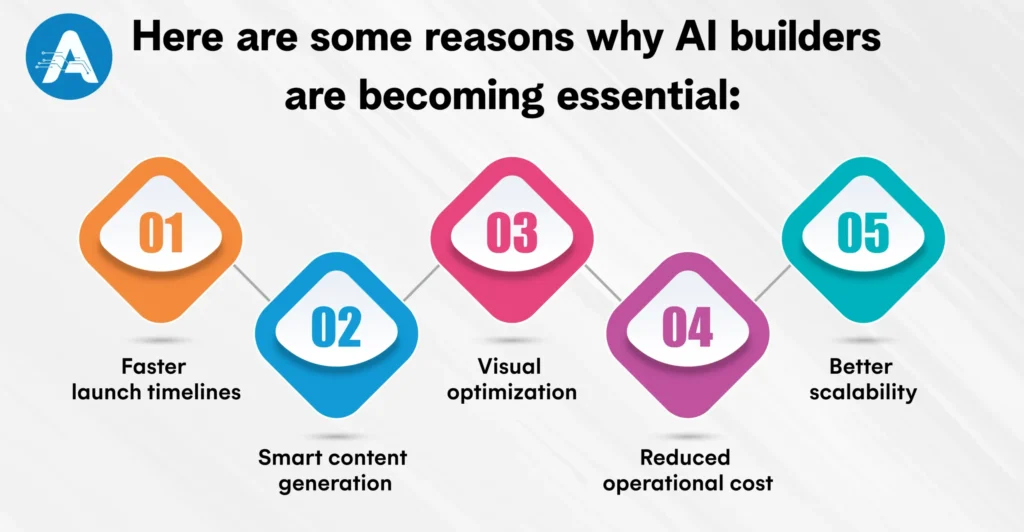
- Faster launch timelines- Instead of spending 20–30 hours on product pages, some AI builders can generate entire pages using just a product URL.
- Smart content generation-AI writes product descriptions, meta tags, blog ideas, and category content using built-in natural language intelligence.
- Visual optimization– AI enhances product images, removes backgrounds, creates banners, and suggests layouts that align with modern UI/UX standards.
- Reduced operational cost– You don’t need multiple designers, developers, and writers when AI can automate most of the creation process.
- Better scalability-When launching multiple products quickly, AI saves enormous time.
AI for website development has become a normal practice, not just a trend. This is why many business owners and online entrepreneurs now rely on the best AI website generator, AI site generator, and AI website creator instead of building everything from scratch.
You may also want to know the Best AI Development Company
How to Choose the Best Shopify AI Website Builder
Choosing the right Shopify AI website builder can save you hours of work and help create a high-converting online store. If you are planning to build your Shopify store quickly, here’s how to pick the best Shopify AI website builder for your needs.
- Choose tools that work seamlessly with Shopify stores so you can manage products, checkout, inventory, and more without extra hassle, something even an experienced AI development company focuses on when building scalable e-commerce solutions.
- Look for AI features like AI-generated layouts, product descriptions, page creation, responsive design, SEO support, and intelligent content generation. Tools with capabilities related to AI website development, such as AI website builder, AI create website, AI website generator, and free AI website builder, can make building your store much easier.
- Make sure the tool allows you to get a fully functional Shopify store up and running quickly, sometimes in just a few hours or even minutes.
- Pick a solution that lets you customize designs, manage larger product catalogues, and scale your store as your business grows.
- Check real-world performance by reviewing testimonials or case studies to see whether the tool improves conversion rates, saves time, and produces high-quality content.
- Consider affordability and free options, especially if you are starting small or want to test an AI website builder without spending too much upfront.
Top 7 Best Shopify AI Website Builder Solutions 2026
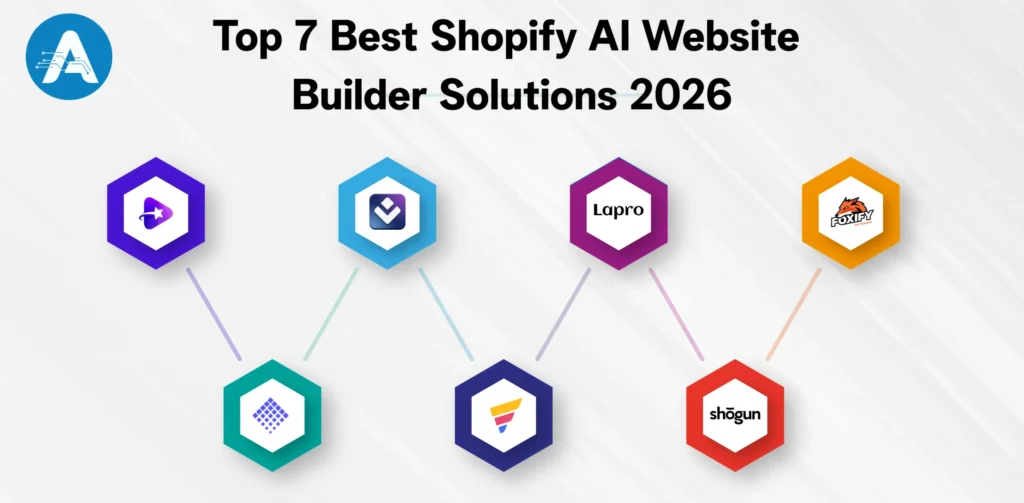
1. Shopify Magic
Shopify Magic is not a standalone builder, but it’s one of the most accessible AI tools for website design and content within Shopify itself. It helps with product descriptions, content creation, blog ideas, basic layouts, and image improvements without adding extra apps. You will find all inside your Shopify dashboard. This AI website builder is apt for Shopify users who prefer simple AI support without installing third-party tools. All its advanced features have helped stores reduce content writing time by almost 25 per cent.
Key Features
- Automated descriptions
- SEO-friendly text generation
- blog topic ideas,
- basic image edits
- smart content suggestions
If you are looking for a simple AI website builder with built-in features at no extra cost, then Shopify Magic is ideal for effortless store management.
2. Atlas AI Store Builder
Atlas AI is one of the most popular Shopify AI website builder tools because it can create a complete store in less than a minute using only a product link. It collects product data, builds layouts, writes persuasive descriptions, improves images, and sets up the entire website automatically. It works like a full AI website generator for fast Shopify launches. Furthermore, it is ideal for beginners, drop shippers, and busy entrepreneurs who want an instant store without manual designing. Many users say it saves hours of work per product.
Key Features
- AI-generated layouts
- Optimized product pages
- Improved product images
- SEO ready content
- Automatic store setup
- Instant product import from Amazon or AliExpress
If you want the fastest way to launch a conversion-ready Shopify store with almost no effort, Atlas AI gives you complete automation from a single prompt.
3. Lapro.io
Lapro.io mixes AI layouts, conversion-focused copywriting, and instant testing. It is made especially for e-commerce brands and drop shippers. It can create complete product pages in a few seconds by pulling product data from marketplaces like Amazon and AliExpress. It is apt for small and mid-sized brands, drop shippers, and entrepreneurs who want fast product launches. After switching to its templates, many users report improved sales.
Key Features
- Multilingual AI product pages
- Strong conversion templates
- AI-powered layouts
- Built-in testing and optimization tools
- Many users report improved sales after switching to its templates
If you care more about speed and conversions than deep custom design, this tool is perfect for launching products or testing niches quickly.
4. Foxify
Foxify is an affordable yet powerful Shopify AI website builder. It is known for clean templates, AI support, and a simple drag-and-drop editor that suits new and budget-friendly store owners. It is apt for small businesses, new entrepreneurs, and budget-conscious sellers.
Key Features:
- Ready-made templates
- AI-generated copy
- Easy drag and drop editing
- Mobile-friendly layouts
- Sticky add to cart features
- Low-cost plans
If you want stylish pages without spending too much, Foxify gives you great value with AI support.
5. PageFly
PageFly is one of the most widely used AI page builders for Shopify. It is great for creating fast landing pages for promotions, seasonal offers, and product launches. It is simple, beginner-friendly, and very quick to work with. It is ideal for stores that need quick landing pages for campaigns or new product releases.
Key Features:
- AI-assisted templates
- Simple drag and drop editor
- Countdown timers
- Reusable blocks
- Mobile-optimized pages
- Smooth Shopify integration
If you want clean landing pages in minutes without any coding, PageFly makes the process extremely easy.
6. GemPages AI
GemPages AI offers both creativity and intelligent automation. You get full drag and drop control along with AI suggestions for layouts, page sections, and sales-focused designs. It is ideal for people who want freedom in designing while still getting support from AI. It is apt for store owners who want flexible design options with smart AI guidance.
Key Features
- AI-assisted page layouts
- Conversion-focused elements
- Simple drag and drop editor
- SEO friendly blocks
- Mobile optimization
- Split testing tools
If you love designing but want AI to help with ideas, structure, and performance, this tool gives you the perfect balance.
7. Shogun Page Builder
Shogun is loved by advanced users because it combines AI assistance with deep customization. You get complete design freedom, reusable page sections, very fast loading pages, and powerful testing features. It is ideal for large stores, scaling brands, or advanced sellers who need strong design control.
Key Features
- AI layout suggestions
- Custom page building
- Advanced testing
- Reusable design blocks
- Performance optimization
- Full creative control
If you want enterprise-level customization with AI guidance to improve conversions, Shogun is a strong choice.
You may also want to know the AI Voice Generator Platform Development
Best Shopify AI Website Builder Tools (2026)
| AI Website Builder | Best For | Key Features | Why choose it |
| Shopify Magic | Shopify users who want simple, built-in AI tools | AI descriptions, SEO content, blog ideas, basic layouts, image edits, and content suggestions | No extra apps needed, reduces content creation time by 25%, easiest AI tool inside Shopify |
| Atlas AI Store Builder | Beginners, dropshippers, busy entrepreneurs | AI store layouts, optimized pages, improved images, SEO content, instant product import, and automatic store build | Fastest full Shopify AI website builder, creates complete stores in under a minute, ideal for fast launches |
| Lapro.io | Small–mid brands, dropshippers, fast product testing | Multilingual product pages, conversion templates, AI layouts, A/B testing, optimization tools | Builds pages in seconds, boosts conversions, great for rapid niche testing |
| Foxify | Budget-friendly merchants, small | Ready templates, AI copy, drag-and-drop editor | Affordable, easy to use, stylish pages with AI assistance |
PageFly | Stores needing quick landing pages for campaigns | AI templates, drag-and-drop editor, countdown timers, reusable blocks, and mobile optimization | Ideal for promotions, seasonal sales, and fast landing page creation with no coding |
| GemPages AI | Store owners who want design freedom + AI help | AI layout ideas, conversion elements, drag-and-drop editor, SEO blocks, mobile optimization, split testing | Balanced AI + creativity, perfect for flexible and high-performance designs |
| Shogun Page Builder | Large stores, scaling brands, and advanced customization | AI suggestions, advanced page building, reusable blocks, performance optimization, A/B testing | Enterprise-level design control, deep customization, and powerful for high-growth stores |
Every coin has two sides, and the same applies to Shopify AI website builders. They offer powerful advantages, but they also come with certain limitations that you should be aware of before relying on them fully.
Limitations of AI Website Builders for Shopify
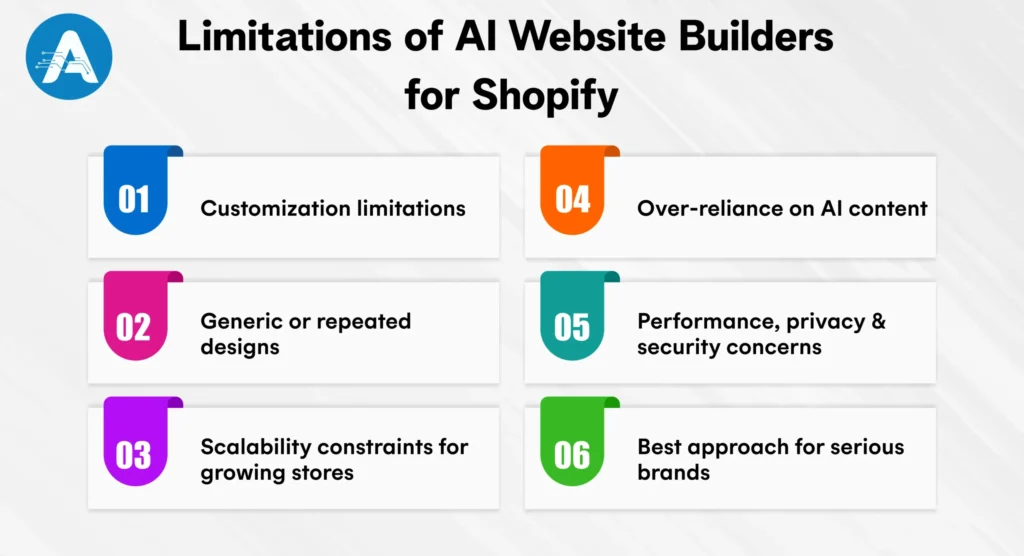
- Customization limitations – AI layouts may not fully match your brand identity, and you may still need manual custom CSS or JS to refine the design.
- Generic or repeated designs – Basic AI builders often generate layouts that look similar, which can reduce brand uniqueness and hurt long-term SEO differentiation.
- Scalability constraints for growing stores – Shops needing complex filters, custom checkout flows, or unique UI may outgrow AI builders and require an experienced AI application development team.
- Over-reliance on AI content – AI-generated product pages and SEO text can sometimes feel generic, requiring manual improvement for stronger ranking and conversions.
- Performance, privacy, and security concerns – Some AI builders depend on third-party tools, which may affect site speed, data control, or long-term stability.
- Best approach for serious brands – AI website builders are excellent starting points, but many businesses later enhance or rebuild their store with professional AI app development services to achieve full customization and better performance.
Wrapping Up
As someone who works on content that actually drives business results, you can see how AI is completely changing the e-commerce game. The gap between your ideas and your execution is getting smaller every day. Now, you can literally wake up with a store idea in the morning and have your Shopify site live by afternoon. What once needed big budgets, long timelines, and full teams is now possible in just a few hours with the right AI website builder or even an AI website builder free option that provides a quick starting point for new sellers.
When you explore the top Shopify AI website builder options for 2025, you will see that tools like Lapro.io and Shopify Magic are great for e-commerce-focused workflows and fast content creation. Builders such as Wix ADI with Shopify, Hostinger, 10Web, and Framer also deliver strong value depending on whether you want quick design, more creative control, or a budget-friendly launch. Each AI builder solves a different need, so the best choice depends on your launch speed and customization goals.
As your store grows, you may eventually want deeper customization, better automation, and advanced integrations. This is where working with an AI application developer or choosing AI application development services can take your Shopify store to the next level by improving performance, adding custom features, and integrating AI-driven automation.